Tuesday, November 29, 2022

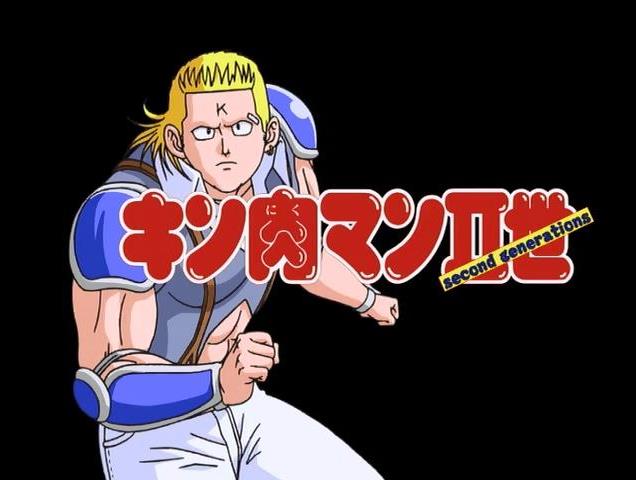
Kinnikuman II-Sei: Ultimate Muscle 1 & 2: "I Believe in Your Love", But Only if You "Trust Yourself"

On September 14, 2022, three days after Episode 36 of Toei's Kinnikuman II-Sei TV anime aired in Japan, 4Kids debuted its English adaptation as part of the launch of the Saturday morning FoxBox programming block. Titled Ultimate Muscle: The Kinnikuman Legacy, the show would go on to achieve notable success for its time, airing two episodes at a time every week until December 14, 2002, just two weeks before the anime finished airing in Japan, which covered the first 26 episodes. Following this, the show would go on a two-month hiatus before returning on February 8, 2003 with Episode 27, upon which the show would air just one episode every week on FoxBox. As for why that hiatus came about, I would imagine it was mainly because the show was likely more popular abroad than it was in Japan, but there was a problem: The anime ends on an awkward spot, as a new story arc just gets established, only to then switch over to an anime-only story arc for its finale. With the anime finishing up in Japan, 4Kids likely took this hiatus to contact Toei & work out a deal... One that would result in brand new episodes of Ultimate Muscle that would finish off the story arc that only just got started.


So on October 18, 2003, the week after Episode 51 debuted in English, Ultimate Muscle just kept going on FoxBox with the worldwide debut of "Episode 52", as though these new episodes always existed; more than likely, Toei produced these episodes throughout 2003, shortly after finishing Kinnikuman II-Sei. However, this situation of 4Kids commissioning Toei produce more 26 more episodes of Ultimate Muscle is more like what happened to Beast King Go-Lion when more episodes of Voltron were commissioned in the 80s, instead of what happened to The Big O II earlier in 2003, i.e. these episodes were made specifically for English release first. However, unlike those bonus Voltron episodes, these new episodes of UM would eventually get aired in Japan, with (most of) the original Japanese voice cast returning to reprise their roles, though in this case it would technically be considered a "Japanese dub". So on April 8, 2004, just as UM was seven episodes away from finally ending on FoxBox, the first 13 episodes of these new episodes started airing on TV Tokyo weekly, now under the title Kinnikuman II-Sei: Ultimate Muscle. Then, on January 5, 2006 (yes, nearly two whole years later!), the remaining 13 episodes finally started airing on TV Tokyo under the title Kinnikuman II-Sei: Ultimate Muscle 2. By this point, Yudetamago had moved on to 2004-2011's Kinnikuman II-Sei: Kyukyoku no Chojin Tag-hen/Ultimate Chojin Tag Chapter, which saw the New Generation go back in time & fight against/team with the Legends in the prime & featured a new logo for the franchise, one that UM2 (& the later DVD release for these two "seasons") adopted; I honestly prefer the old logo, but the later one's still good. However, where the original Kinnikuman II-Sei anime aired in prime time, these two new seasons aired in Japan as late-night anime (1:00 AM, in particular, both times around), and since neither got fansubbed back in the day some don't even realize that these even aired in Japan, thinking that the last 26 episodes of Ultimate Muscle were English-exclusive.

So, to finish off the 20th Anniversary retrospective of the original 2002 Kinnikuman II-Sei anime, let's jump ahead to 2004 & 2006 by taking a look at the Japanese version of these (4Kids-commissioned) final 26 episodes, and while they were aired separately in Japan, with a two-year gap in between, I'll just cover them together, since they tell a single overall story arc.

Monday, November 21, 2022

Obscusion B-Side: Prowling the Official Atari Jaguar Catalog: 1995 (Part 1)

"Regardless of how 1994 panned out, though, 1995 will truly have to be the make-or-break year for the Atari Jaguar, as while it's one thing to compete with the (supposedly) weaker hardware of the Sega Genesis & Super Nintendo, or the fellow also-ran of the 3DO or even the CD-i, it's another thing to compete with brand new 32-bit hardware, namely the upcoming Sony PlayStation & Sega Saturn."

As of New Year's Day 1995, the Atari Jaguar has been on the market for a total of just 14 months, yet only has 17 games to call its own, or just barely over 1 game per month; that's not good, especially when the total official (cartridge) catalog would only hit 50. Also notable in said current catalog is that literally all but one game released on the Jag so far has been published by Atari Corporation, with said exception being Brutal Sports Football by Telegames; Virgin Interactive co-published Dragon: The Bruce Lee Story with Atari. However, 1995 will wind up being the most important year in the entire life of the Atari Jaguar, for a few reasons. First, it's the final year in which Atari Corporation itself actually would continue to actively support its final console, though the truth of that wouldn't be known until later on. Second, 24 games would see release on cartridge in this year alone, so literally 48% of the Jag's entire catalog came out in 1995; because of that, 1995 will take FIVE PARTS to fully cover here! Third, and most relevant to this part of this overarching series, we finally see third-party publishers start to support the Jaguar "en masse"... or, at least, whatever can qualify as that for this console.

In fact, Atari would have absolutely nothing to do with the first five games released on the Jaguar in 1995, making this the only part to not feature an Atari-published game whatsoever... at least, the only part in which "Atari" itself more or less still existed. So, after a bit of a hiatus, let's finally start the Atari Jaguar's most pivotal year with Attack of the Third Parties!


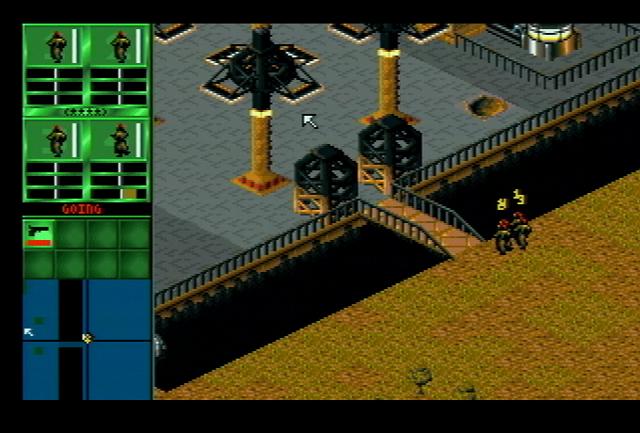
We start off this cavalcade of third parties with Ocean Software, the UK-based developer/publisher that, at one point, was one of the biggest in all of Europe during the 80s & 90s, before eventually getting purchased by Infogrames (which itself would eventually become the Atari that currently exists today) in 1996, followed by being rebranded to Infogrames UK in early 1998. We're still a year out before any of that, though, and in this case we have Ocean publishing a Jaguar port of a PC classic, Syndicate. Originally released on June 6, 1993 for MS-DOS & Amiga computers, Syndicate was the brainchild of Bullfrog Productions, the studio the legendarily infamous Peter Molyneux helped found in 1987 that went in to achieve great success with titles like Populous, Magic Carpet, Dungeon Keeper, & (well) Syndicate. Right around the time of this Jaguar port's January 27 release, Bullfrog would be acquired by Electronic Arts (back when "EA" actually stood for something), while Molyneux would leave Bullfrog in 1997 to co-found Lionhead Studios; Bullfrog itself would eventually be merged with EA UK in 2001. Prior to the Jag port, Syndicate had already been ported to console in 1994 for the Sega Genesis/Mega Drive in North America & Europe, as well as a Mega CD version exclusive to Europe, while ports to the SNES, 3DO, & Amiga CD-32 also would see release throughout 1995. Unlike the Sega & Nintendo ports, which had to be scaled down to work for their weaker hardware, Jag Syndicate is apparently more of a direct port, much like the later 3DO version, so while a real-time tactical strategy game isn't really my thing, let me see if the original's quality still shines through on Atari's hardware.

Monday, November 7, 2022

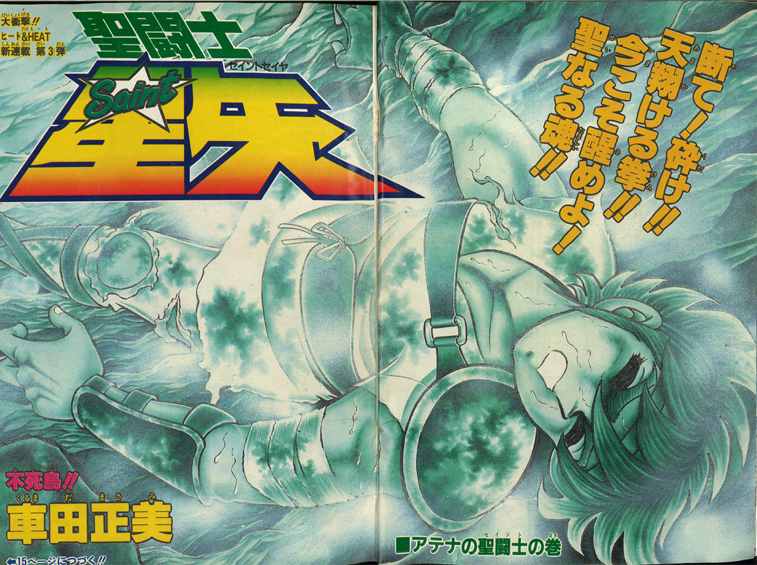
Theory Musing: Why Does Saint Seiya Consistently Fail in "North of Mexico"?

Debuting at the start of 1986 (technically late 1985, but let's not split hairs here) in the pages of Weekly Shonen Jump, Saint Seiya was the creation of mangaka Masami Kurumada, who had already seen major success twice over the past decade with Ring ni Kakero (his first big hit) from 1977-1981 &, to a lesser extent, Fuma no Kojirou from 1982-1983. He had also seen failure twice, with his debut work Sukeban Arashi from 1974-1975 & Otoko Zaka from 1984-1985 both being cancelled early on in their respective runs; Otoko Zaka would eventually return in 2014, nearly 30 years later. The last, in particular, was conceived by Kurumada as his magnum opus, the manga he had always wanted to make, so when he was told to stop making it (though he defiantly called it "Incomplete" on the last page of the [then] final chapter, proof of his status within Jump at the time) he decided that his next work would be something that he knew the general public would want to read, something that would be undeniably popular. In fact, he could take the things that worked for him a decade prior with RnK & FnK, re-utilizing them in ways that would be brand new for the younger generation of readers who had likely never read his previous hits.

The End Result of Every Attempt to Make
Americans & Canadians Care About Saint Seiya

The end result was a manga that, despite eventually being cancelled in & of itself and needing to have its final chapter published in an issue of V Jump magazine, still ran from 1986-1990 in Weekly Jump for 246 weeks straight (only four longer than RnK), compiled across 28 volumes, with Kurumada never taking a break; it remains his longest individual series in his entire catalog. In fact, Saint Seiya was often neck & neck with the likes of Dragon Ball & even Fist of the North Star (&, to a lesser extent, Captain Tsubasa & Sakigake!! Otokojuku) in terms of sheer popularity, with Saint Seiya apparently even surpassing one or even both at points during 1987 & 1988. Seiya was so instantly popular that a TV anime adaptation by Toei debuted before the manga was even an entire year old & was apparently optioned (alongside a toy deal with Bandai) before the first chapter was even published; truly, Kurumada knew what worked. In fact, while Akira Toriyama & the duo of Buronson and Tetsuo Hara's respective series are often cited as landmark & trendsetting works for shonen action manga, Saint Seiya is also just as much up there in a lot of ways, especially when compared to Dragon Ball, as a lot of what has become so iconic in that series (especially its second half) technically first appeared there AFTER Saint Seiya had done something similar first (Power of Gold vs. Super Saiyan, for example), or Seiya's entire run had simply ended. Regardless, Saint Seiya is a cherished icon of anime & manga, finding itself a massive following that love it to this very day the world over, as it was Kurumada's first work to see release outside of Japan.

That is, unless you live in "North of Mexico", i.e. the United States & Canada, where it has constantly only managed to achieve, at best, apathetic acceptance by most anime/manga fans, regardless of how many times it's been given a push over here; there has been a growing fandom for the series over time, but obviously not enough to ever be considered a "success".

At Discotek's most recent licensing bonanza livestream, I noticed some people in the chat repeatedly ask about Saint Seiya, which only reminded me of how the series had bombed three times for the company already: The 80s movie tetralogy across two DVDs in 2013, TMS' OVA adaptation of spin-off manga The Lost Canvas on DVD in 2015 (this was before the English dub debuted for Netflix, which Discotek had nothing to do with), & the movies being re-released on a single BD in 2021. To see people trying to ask Discotek about Saint Seiya just made me think "Where have you been all this time? Didn't you support the prior releases?", and when I brought this up on Twitter an old subject was brought up in response: "Why can't Saint Seiya ever seem to succeed in the US (& Canada)?". So allow me to ruminate some thoughts as we try to see if we can finally free Athena herself from this captivity without needing to simply bash away at it fruitlessly, like many companies have been doing for decades.

Monday, October 31, 2022

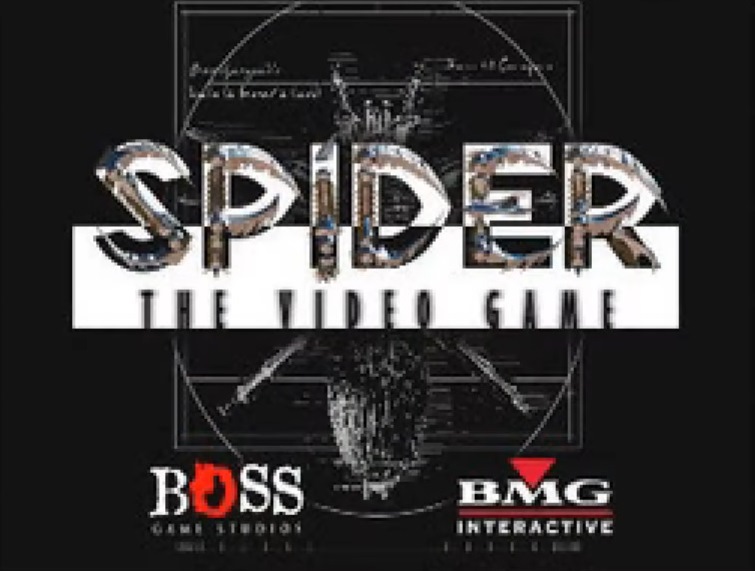
Obscusion B-Side: Spider: The Video Game: Night of the Cybernetic Crawler

Arachnophobia is the fear of spiders, and while only so many people actually have a downright phobia of those eight-legged arachnids (it's apparently only somewhere between 3.5% to 6.1% of the global population), it wouldn't be unfair to say that most people would still react unpleasantly to the sight of one, in general, especially from out of nowhere. Even the word "spider" itself has a bit of an allure to it, which is why there are numerous characters, films, songs, groups, & even a French video game developer named after it. In fact, a commonly held belief in conquering a fear like arachnophobia would be to engage with it directly in a controlled fashion (i.e. exposure therapy)... like maybe through a video game? While some might then think of 2009's Deadly Creatures for the Wii, where you play as both a tarantula & a scorpion, considering that it's Halloween I'm thinking of something a little more "science gone wrong", with a dash of "subtext is for cowards".


Boss Film Studios was a visual effects company founded in 1983 by Industrial Light & Magic alumnus (& VFX legend) Richard Edlund. Boss would go on to become a legendary rival to ILM, having done the VFX for the likes of Ghostbusters, Die Hard, Big Trouble in Little China, Ghost, The Hunt for Red October, Batman Returns, Last Action Hero, & Starship Troopers, to list only a few; to call Boss Film's output "impressive" would be putting it very lightly. In 1994 the company founded an offshoot, Boss Game Studios, that would develop video games, though it wouldn't actually make its public debut until February of 1997 with the focus of this review: Spider: The Video Game. Released exclusively for the PS1 by BMG Interactive, the video game division of the now-defunct Bertelsmann Music Group, Spider would actually wind up being the only title from Boss Game Studios to ever see release while Boss Film Studios was still around, as Boss Film would close up shop on August 26, 1997, citing difficulties in being an independently run studio in such a competitive market. Boss Game would then switch over to exclusively developing Nintendo 64 games (plus one Windows PC port), mostly of the racing variety (even renaming to Boss Racing), before disbanding on June 14, 2002, outliving its parent company by close to five years; Boss' final game, 2000's Stunt Racer 64, is now highly coveted & uber-expensive, due to rarity. Meanwhile, BMG Interactive would eventually be sold to Take-Two Interactive in 1998, just months after publishing a little game called Grand Theft Auto in Europe for the PC & PS1... Ouch; BMG itself would also eventually get purchased by Sony in 2008.

So, for a title originally handled by a bunch of companies that no longer exist in any form, is Spider: The Video Game more like 1990's Arachnophobia, or it is more akin to 2002's Eight Legged Freaks?

Saturday, October 29, 2022

Kinnikuman II-Sei Part 2: Go! (Go!) Go! (Go!)... FIGHT!

Previously on the Kinnikuman II-Sei Review:
"The first half of the TV anime adaptation of Kinnikuman II-Sei does admittedly have a bit of a slow start to it, but recovers well with the last 10 episodes covered here, at least in terms of pacing...While the animation isn't anything amazing, which I'll bring up in more detail next time, the voice work & music definitely more than make up for things so far, but there's still another 25 episodes left to watch for this original 2002 run..."

As mentioned at the start of the prior review, the 2002 TV anime adaptation of the next-gen sequel to Shonen Jump classic Kinnikuman would only run for 51 episodes on TV Tokyo, before being replaced the following year. I've generally heard that it was likely due to slumping ratings in the latter half of the year, and to be fair it does have some realistic logic behind it, as it really wouldn't have been due to catching up to the manga; that said, there could have been other factors. Regardless, by the time the anime debuted on TV, the Kinnikuman II-Sei manga was about to start entering the final match of one of its longest story arcs, which would end right around where we are in this two-part review. Therefore, the anime could have easily continued on for a bit longer beyond what was done in 2002, and luckily that would indeed happen once the anime saw success abroad. However, we aren't quite at the point just yet, so let's return to the original TV anime & see how things play out in the second half. This time around I'll be relying on Japanese DVD rips, as this half never received any English subtitle translation, even via bootlegs (so far, at least).

Also, just a few days before this review, Discotek Media announced that it would be releasing Ultimate Muscle on SD-BD sometime in 2023. However, this is only for the 4Kids dub at the moment, a release for Kinnikuman II-Sei will depend on how well UM performs, so this news affects nothing for me here, as I'm covering the original Japanese version.

It was either Terry the Kid or Seiuchin for the eyecatch,
and though Seiuchin is cool I can't disrespect the Terry Family.

Mantaro Kinniku has just defeated Clioneman in his semi-final match of the New Generation Replacement Tournament between his "Team AHO" & the "Generation Ex" team made up of the Hercules Factory's second year graduating class. Now all Mantaro can do is wait & see who from Generation Ex he'll face in the final match: The noble Jade or the ruthless & still somewhat mysterious Scarface, a.k.a. Mars. Even after all of that, though, Mantaro's battles are nowhere near over, as he'll have to take on a trio of vile convicts known as "No Respect" in order to fully attain an inner strength he's only tapped into subconsciously in the past, before seeing if he can qualify for the Chojin World Grand Prix (Chojin Crown), the revival of the legendary tournaments that the Legends had competed in decades prior... and that's only if a sextet of Evil Chojin don't ruin things by a sudden intrusion.