Monday, October 31, 2022

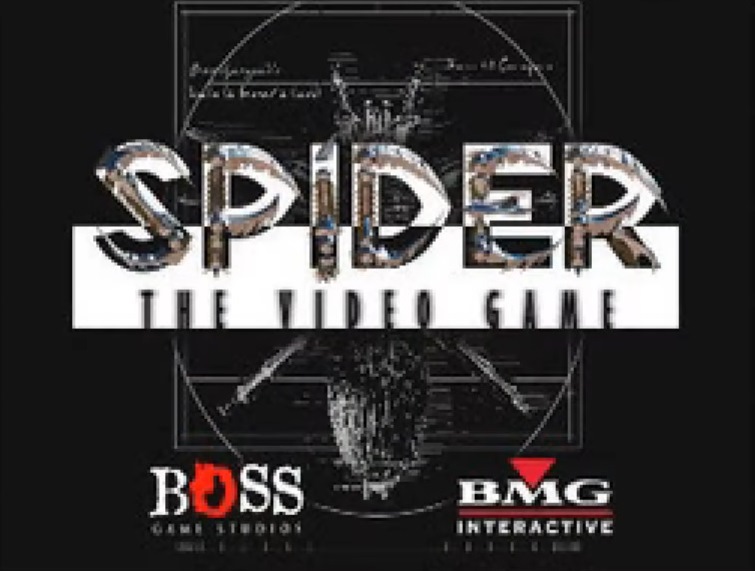
Obscusion B-Side: Spider: The Video Game: Night of the Cybernetic Crawler

Arachnophobia is the fear of spiders, and while only so many people actually have a downright phobia of those eight-legged arachnids (it's apparently only somewhere between 3.5% to 6.1% of the global population), it wouldn't be unfair to say that most people would still react unpleasantly to the sight of one, in general, especially from out of nowhere. Even the word "spider" itself has a bit of an allure to it, which is why there are numerous characters, films, songs, groups, & even a French video game developer named after it. In fact, a commonly held belief in conquering a fear like arachnophobia would be to engage with it directly in a controlled fashion (i.e. exposure therapy)... like maybe through a video game? While some might then think of 2009's Deadly Creatures for the Wii, where you play as both a tarantula & a scorpion, considering that it's Halloween I'm thinking of something a little more "science gone wrong", with a dash of "subtext is for cowards".


Boss Film Studios was a visual effects company founded in 1983 by Industrial Light & Magic alumnus (& VFX legend) Richard Edlund. Boss would go on to become a legendary rival to ILM, having done the VFX for the likes of Ghostbusters, Die Hard, Big Trouble in Little China, Ghost, The Hunt for Red October, Batman Returns, Last Action Hero, & Starship Troopers, to list only a few; to call Boss Film's output "impressive" would be putting it very lightly. In 1994 the company founded an offshoot, Boss Game Studios, that would develop video games, though it wouldn't actually make its public debut until February of 1997 with the focus of this review: Spider: The Video Game. Released exclusively for the PS1 by BMG Interactive, the video game division of the now-defunct Bertelsmann Music Group, Spider would actually wind up being the only title from Boss Game Studios to ever see release while Boss Film Studios was still around, as Boss Film would close up shop on August 26, 1997, citing difficulties in being an independently run studio in such a competitive market. Boss Game would then switch over to exclusively developing Nintendo 64 games (plus one Windows PC port), mostly of the racing variety (even renaming to Boss Racing), before disbanding on June 14, 2002, outliving its parent company by close to five years; Boss' final game, 2000's Stunt Racer 64, is now highly coveted & uber-expensive, due to rarity. Meanwhile, BMG Interactive would eventually be sold to Take-Two Interactive in 1998, just months after publishing a little game called Grand Theft Auto in Europe for the PC & PS1... Ouch; BMG itself would also eventually get purchased by Sony in 2008.

So, for a title originally handled by a bunch of companies that no longer exist in any form, is Spider: The Video Game more like 1990's Arachnophobia, or it is more akin to 2002's Eight Legged Freaks?

Saturday, October 29, 2022

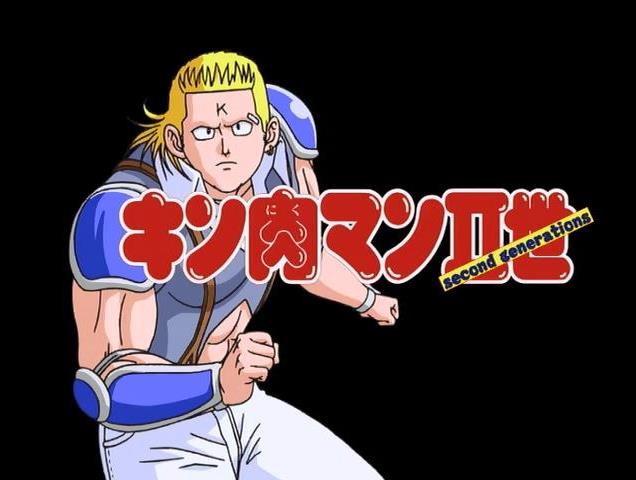
Kinnikuman II-Sei Part 2: Go! (Go!) Go! (Go!)... FIGHT!

Previously on the Kinnikuman II-Sei Review:
"The first half of the TV anime adaptation of Kinnikuman II-Sei does admittedly have a bit of a slow start to it, but recovers well with the last 10 episodes covered here, at least in terms of pacing...While the animation isn't anything amazing, which I'll bring up in more detail next time, the voice work & music definitely more than make up for things so far, but there's still another 25 episodes left to watch for this original 2002 run..."

As mentioned at the start of the prior review, the 2002 TV anime adaptation of the next-gen sequel to Shonen Jump classic Kinnikuman would only run for 51 episodes on TV Tokyo, before being replaced the following year. I've generally heard that it was likely due to slumping ratings in the latter half of the year, and to be fair it does have some realistic logic behind it, as it really wouldn't have been due to catching up to the manga; that said, there could have been other factors. Regardless, by the time the anime debuted on TV, the Kinnikuman II-Sei manga was about to start entering the final match of one of its longest story arcs, which would end right around where we are in this two-part review. Therefore, the anime could have easily continued on for a bit longer beyond what was done in 2002, and luckily that would indeed happen once the anime saw success abroad. However, we aren't quite at the point just yet, so let's return to the original TV anime & see how things play out in the second half. This time around I'll be relying on Japanese DVD rips, as this half never received any English subtitle translation, even via bootlegs (so far, at least).

Also, just a few days before this review, Discotek Media announced that it would be releasing Ultimate Muscle on SD-BD sometime in 2023. However, this is only for the 4Kids dub at the moment, a release for Kinnikuman II-Sei will depend on how well UM performs, so this news affects nothing for me here, as I'm covering the original Japanese version.

It was either Terry the Kid or Seiuchin for the eyecatch,
and though Seiuchin is cool I can't disrespect the Terry Family.

Mantaro Kinniku has just defeated Clioneman in his semi-final match of the New Generation Replacement Tournament between his "Team AHO" & the "Generation Ex" team made up of the Hercules Factory's second year graduating class. Now all Mantaro can do is wait & see who from Generation Ex he'll face in the final match: The noble Jade or the ruthless & still somewhat mysterious Scarface, a.k.a. Mars. Even after all of that, though, Mantaro's battles are nowhere near over, as he'll have to take on a trio of vile convicts known as "No Respect" in order to fully attain an inner strength he's only tapped into subconsciously in the past, before seeing if he can qualify for the Chojin World Grand Prix (Chojin Crown), the revival of the legendary tournaments that the Legends had competed in decades prior... and that's only if a sextet of Evil Chojin don't ruin things by a sudden intrusion.

Monday, October 10, 2022

Obscusion B-List: Wait... Capcom Published WHAT!?!

Originally established back on May 30, 1979 as I.R.M. Corporation, the Capcom that we know today (named after a clipped compound of subsidiary Capsule Computers Co., Ltd.) came about in 1983 & ever since then has become one of the biggest names in third-party video game development & publishing, with many iconic franchises in its catalog. That being said, though, Capcom has had its name attached to some games that would make you react like Drew Scanlon did that one time on Giant Bomb & think "Wait... WHAT!?!", and while this can apply to numerous other video game companies (hmmm, maybe a potential recurring concept?) I think Capcom is probably the most interesting/amusing to actually think about, in this regard.

Admittedly, though, this primarily applies to Capcom USA, though Capcom Japan certainly has its own share of "Wait... WHAT!?!" releases (maybe for another time), so let's take a look at some games that Capcom's logo was attached to that you'd normally never expect to see happen.


The idea of Capcom making a game based on Star Wars sounds like a slam dunk idea, yet it never actually came to be. Instead, the closest is supposedly the Star Gladiator duology during the second half of the 90s, with the first game allegedly being pitched originally as a Star Wars fighting game, only for Lucasfilm to steal the idea & poorly attempt making a fighting game of their own politely decline the proposition. However, that doesn't mean that Capcom has never had its name appear on any games based on the iconic space opera franchise, because Capcom USA did manage to get a hold of Star Wars for two games released on the venerable Game Boy... at least for a time, that is.

Thursday, September 29, 2022

Kinnikuman II-Sei Part 1: Let the Generation "Get You"!

In mid-1998, following a 5-part "Legendary Prologue" from mid-1997 to the start of 1998, the mangaka duo called Yudetamago debuted Kinnikuman II-Sei (a.k.a. "Nisei/Second Generation") in the pages of Shueisha's Weekly Playboy magazine for adults. Despite becoming a notable hit for its specific age range, other companies obviously felt that there was potential for this next generation sequel to be marketable to younger audiences, much like the original Kinnikuman had been during the late 70s & the majority of the 80s. Naturally, this resulted in the anime studio behind the prior Kinnikuman anime productions, Toei Animation, getting involved to adapt this new manga, and after a mid-2001 theatrical short to help get people ready, the Kinnikuman franchise returned to Japanese TV screens in early 2002, roughly 10 years since Kinnikuman: Kinniku-sei Oui Sodatsu-hen/Scramble for the Throne finished airing back in late 1992.

However, unlike all of the prior anime productions for this beloved franchise, this new one would get an official English release...


Debuting on January 9, 2002 on TV Tokyo at 18:00 (a.k.a. 6:00 PM), the Kinnikuman II-Sei TV anime would replace s-CRY-ed (yes, that show was actually family programming in Japan!) & run for pretty much all of 2002, ending after 51 episodes on Christmas Day that same year; it would then be replaced with Shutsugeki! Machine Robo Rescue. Unlike the original Kinnikuman though, which only ever saw localization in North America by way of the Kinkeshi collectible mini-figures under the name M.U.S.C.L.E. (& a sole NES game to tie in with that), the Kinnikuman II-Sei anime did catch the interest of English localizers, specifically those at 4Kids Entertainment, then known most for its edited dubs of Pokémon & Yu-Gi-Oh! Duel Monsters that aired in North America as Saturday morning cartoons on Kids' WB. 4Kids would quickly license Kinnikuman II-Sei & debut it on September 14, 2002 (while the original Japanese version was still airing!) as part of the launch line-up for the new FoxBox block that replaced Fox Kids, alongside Fighting Foodons, Kirby: Right Back at Ya!, & a dubbed version of Ultraman Tiga. Now renamed Ultimate Muscle: The Kinnikuman Legacy, this dub would go on to be a surprise hit for 4Kids, so much so that the company even commissioned Toei to produce another 26 episodes, bringing the total up to 77, so that the story arc that the original TV series had just barely started before ending could actually be fully adapted. We'll get to those bonus 26 episodes in a later review to finish out this 20th Anniversary retrospective, and I should point out that I will NOT be covering Ultimate Muscle in any of these reviews in any real detail, because in some ways it's kind of its own show. That said, I will reference characters' UM names when I first mention them from here on out, for clarity, & there will be a minor comparison here & there, for effect.

Instead, we'll be starting with the first 26 episodes of the original Japanese version of the Kinnikuman II-Sei TV anime, which were the only episodes that actually did see release unofficially via bootleg DVD boxsets one could find in various Chinatown districts (like the one in New York City, for me). Shockingly enough, the English subtitles for these bootlegs are actually pretty good, all things considered (though they still have tons of the usual awkward translation, as expected), and the bootleg DVDs for Kinnikuman II-Sei are the only ones left that I still own & have not used to review an anime on this blog. So are you ready to "Do the Muscle"?

Tuesday, September 20, 2022

Obscusion B-Side: Cybernetic Empire: Wolf Team's Last Stand with Telenet

Founded in October of 1983, Telenet Japan was a Japanese video game developer that got its start on Japanese PCs of the time, but would become most well known from the late 80s up through the mid-90s, when it released a wide variety of games from its various subsidiaries, like Reno (which would be the namesake of its North American division, Renovation Products), its successor Riot, & Shin Nihon Laser Soft. This resulted in games like the Cosmic Fantasy Series, Last/Red Alert, the XZR/Exile Series, & the cult classic Gaiares, as well as ports of other companies' titles, like Ys III (Genesis version), the Xak Series (PC-Engine CD version), & even Digital Devil Story: Megami Tensei (PC version). Easily the most iconic subsidiary of Telenet, though, was the "Game Creative Staff" at Wolf Team, which was founded in 1986 before going independent in 1987 under Masahiro Akishino's leadership, only to then become a Telenet subsidiary again in 1990 after disputes with Akishino lead to him leaving & founding J-Force (which is its own story altogether). In 1993 Telenet merged all of its subsidiaries together into Wolf Team, which itself lead to staff leaving & founding Media.Vision (Wild Arms) & the now-defunct Neverland Company (Lufia & Rune Factory) and Media Entertainment (Strahl). While Wolf Team's games weren't always the most polished, much like most of Telenet's output, they were still filled with tons of personality & charm, not to mention excelleny music, which has allowed the likes of El Viento, Earnest Evans, Granada, Arcus Odyssey, & the Final Zone & Valis Series (which were both started by Wolf Team) to remain in people's minds to this very day.

However, things would change in late 1995 with a Super Famicom RPG called Tales of Phantasia...


Based on an unpublished novel titled Tale Phantasia that was written by Wolf Team's Yoshiharu Gotanda, the studio had grand ambitions with this RPG, so much so that the studio felt that Telenet itself wasn't the right choice for publisher, due to a mix of already rough relations with the company & the fact that Telenet wasn't the same, financially, by this point. In fact, following Tokyo Twilight Busters for the PC-98 earlier in mid-1995, Telenet would almost exclusively publish pachinko, pachislot, & mahjong games until the early 00s, when it'd then publish two golf games for GameCube & PS2, and then sully the Valis & Arcus names with porn spin-offs, before dying in 2007. Wolf Team would eventually find a publisher for its Super Famicom RPG in Namco, though conflicts both internally & with Namco would result in a bunch of staff, including Gotanda himself, leaving to found tri-Ace after Tales of Phantasia's release, leading to the creation of Star Ocean. Afterwards, Wolf Team would live out the rest of its life developing Tales games, before Namco would become majority owner of the studio in early 2003, renaming it Namco Tales Studio (which itself died in 2012, after merging with Bandai Namco Studios), with the last game to ever bear the Wolf Team name being Tales of Destiny 2 for the PS2 (i.e. the real ToD2, not Tales of Eternia) in late 2002. However, there is one non-gambling title from Telenet Japan from the late 90s... and it's also Wolf Team's last non-Tales video game.

On August 5, 1999, in between the releases of the PS1 remake of Tales of Phantasia in 1998 & Tales of Eternia (i.e. "Tales of Destiny II") in 2000, Wolf Team & Telenet teamed up one last time for Cybernetic Empire, a "3D Action Adventure" game for the PlayStation that featured character designs by Akihito Yoshitomi, who at the time was serializing the manga Eat-Man; Telenet often hired mangaka to do character designs for its games, like Nobuteru Yuki & Kazutoshi Yamane. Ironically, two months earlier, Konami's Gungage came out on PS1 in Japan, which also featured Yoshitomi designs, though Yoshitomi actually shares the copyright with Telenet's release. Cybernetic Empire would be the last game to feature the Wolf Team logo on the cover & during start-up, though modified from its original design, but is almost never brought up when the studio is discussed, with most talk of Wolf Team being split between its early 90s output & its pre-buyout Tales games. Is Cybernetic Empire any good, and is it truly representative, in any way, of the old Wolf Team/Telenet days of yore during a post-Tales time? Let's find out.